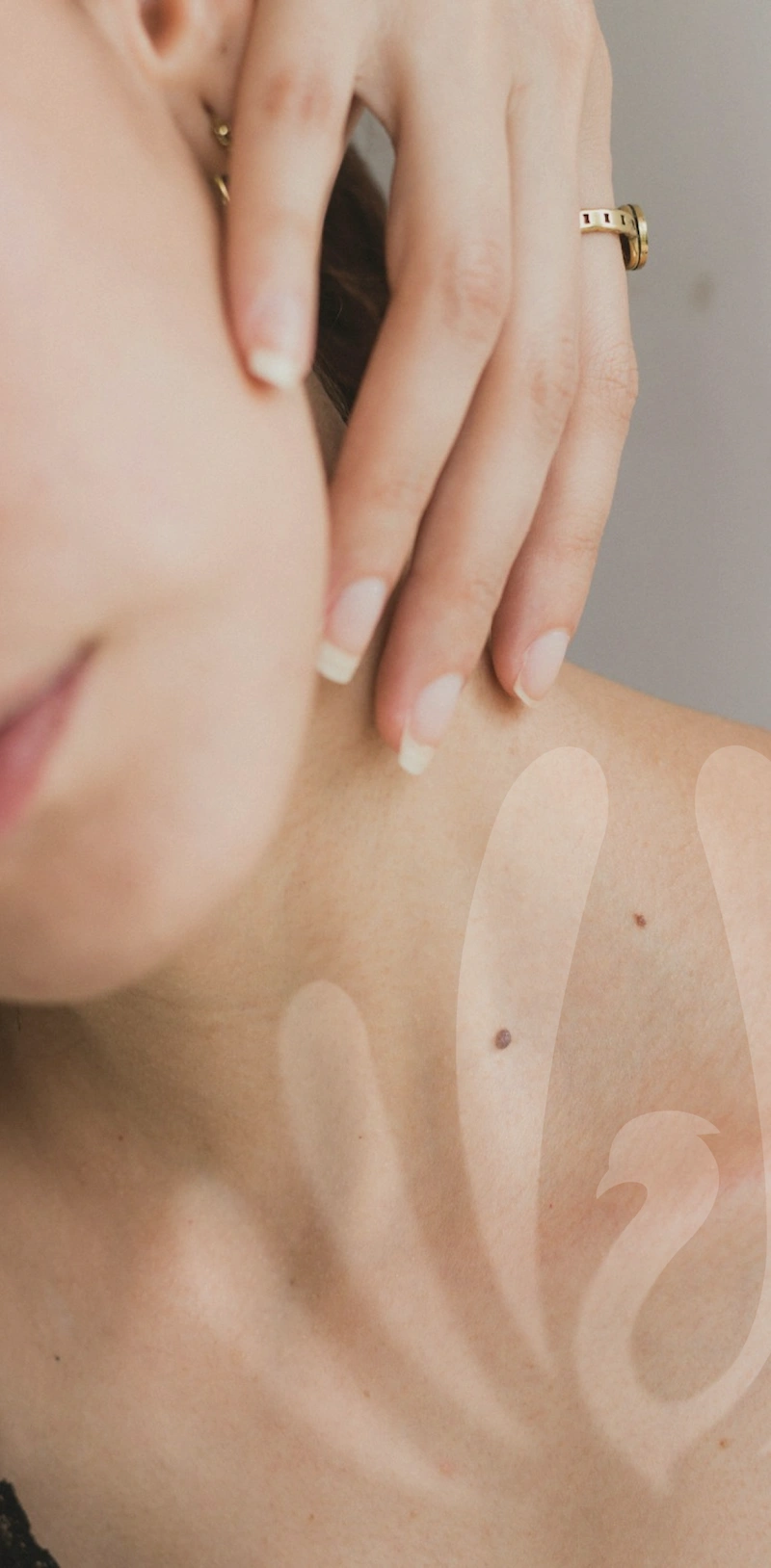

Various changes can appear on the skin – moles, pigment spots, or skin growths. Some are completely harmless (benign), while others can be cancerous (malignant).
Skin cancer is the most common form of cancer in humans. Most often, it appears on the skin Basal cell carcinoma, which usually grows slowly, while melanoma Melanoma is the most dangerous form of skin cancer and therefore requires special attention. Melanoma originates from pigment cells and is responsible for most skin cancer deaths, and its incidence is increasing fastest worldwide. Early detection of melanoma is therefore crucial., Melanoma in its early stage is curable with a simple surgical procedure and has a very good prognosis.
Distinguishing between dangerous and non-dangerous skin changes is often not easy, and a dermatologist's examination is a necessary step for the early detection and treatment of potentially dangerous skin lesions.
________________________________________________________________________
When examining moles, dermatologists use Dermatoscope - a handheld optical device with a built-in lens and additional illumination, allowing for 10x magnification and a view of skin surface structures invisible to the naked eye. The dermatoscope is placed directly on the mole or skin, and if necessary, contact fluid (saline solution, alcohol, gel, or water) is used to reduce light reflection. This way, potentially dangerous (malignant) changes can be distinguished from harmless (benign) ones with high reliability.
If a suspicious skin cancer change is observed during examination, it should be surgically removed and histopathologically examined as soon as possible.
________________________________________________________________________
Skin cancer can occur in anyone – regardless of age, skin type, or ethnicity. Therefore, preventive screenings are recommended for everyone, especially for individuals with a higher risk of skin cancer:
___________________________________________________________________________
Schedule a mole check with a dermatologist as soon as possible if you notice the following on your skin:
If you notice a suspicious change on your skin that is new or changing, don't hesitate to have it checked by a dermatologist.
___________________________________________________________________________
Ordering by phone:
+386 (51) 537 777