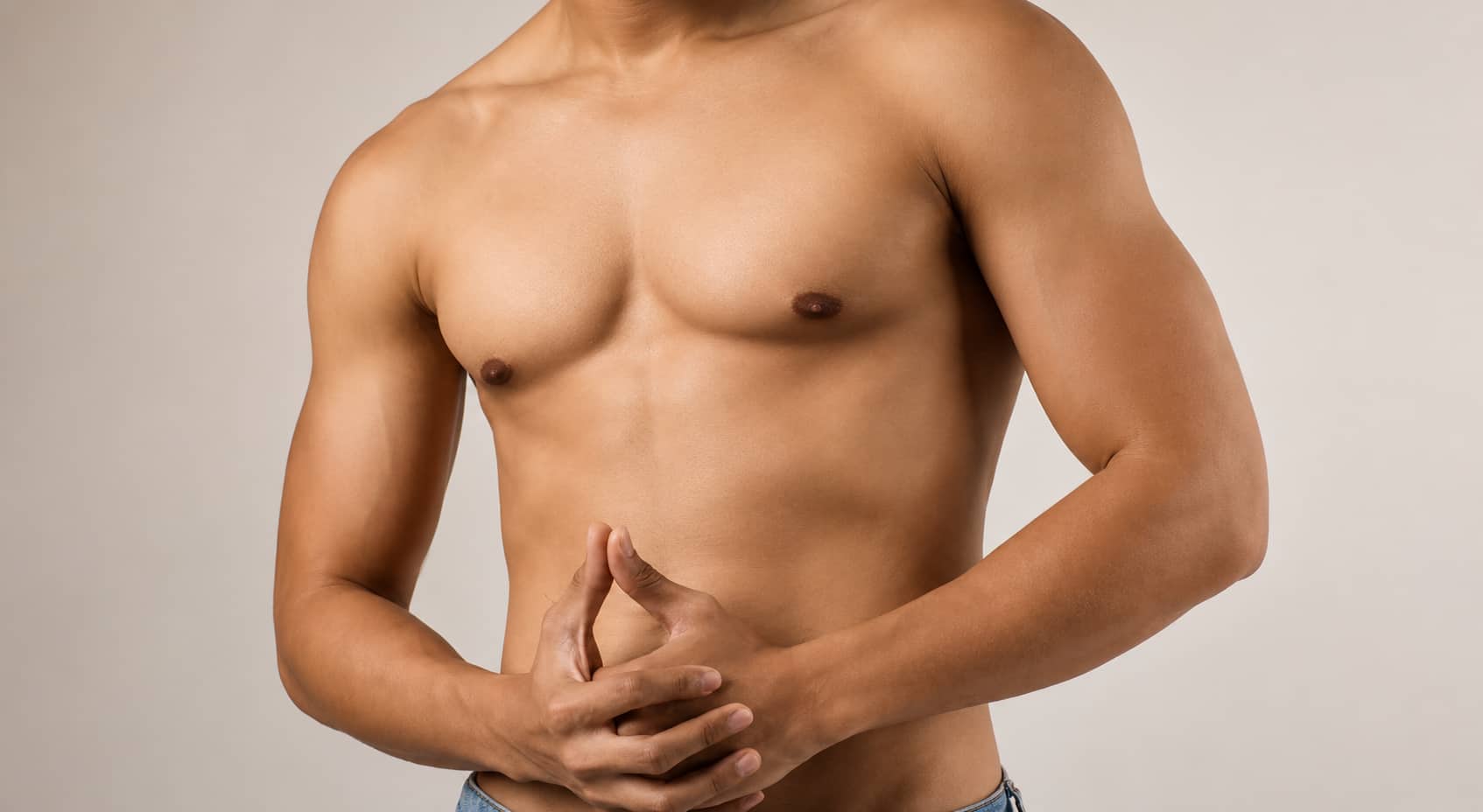


Breast reduction surgery is a surgical procedure to remove excess glandular and/or fatty tissue and shape a flatter, more defined chest. The highly skilled Juventina team always selects an individually tailored approach and considers the patient's overall picture.
We adjust the approach based on the type of gynecomastia. Our approach is based on accurate diagnostics and understanding the cause, individual surgical plan and creating natural male chest contours.
The goal of the procedure is a flatter, firmer, and natural-looking chest without visible signs of surgery.
Before the procedure, we ask the patient about the onset, duration, symptoms, medication use, and other health problems. During the examination, we determine the proportion of fatty and glandular tissue, ptosis, the amount of excess skin, and describe the hairiness. Based on the examination results, we may decide on additional tests of the testicles and hormonal status, examination of the thyroid gland and liver. Treatment depends on the cause. Pathological gynecomastia requires removal of the cause or diagnosis of the underlying disease. If chemicals are the cause, the therapy that causes gynecomastia should be discontinued.
In surgical treatment, liposuction can be used to remove excess tissue. More often, a correction is needed in which the mammary gland and fat are removed through a small incision at the lower edge of the areola. If it is determined that there is abundant subcutaneous fat in addition to the mammary gland (glandular-fatty or fatty type of gynecomastia), liposuction is also used. In higher stages of gynecomastia, there is an excess of skin, so a surgical technique similar to that used in mastopexy (breast correction in women) must be chosen. The surgery is performed under local or general anesthesia.
Given the state, the procedure may include:
Modern techniques enable:
With a stroke, we emphasize natural male anatomy and aesthetics, thereby shaping a natural male chest appearance.
Recovery after gynecomastia surgery is generally quick, allowing patients to return to their daily activities relatively soon. After the procedure, wearing a compression garment is recommended to help reduce swelling and support proper tissue healing. Mild pain, a feeling of tightness, or chest sensitivity may be present in the first few days, which is a normal part of the recovery process. Most patients can return to work within a few days, while more strenuous athletic activities are advisable only after consultation with the surgeon. The final result gradually takes shape in the following weeks and months as swelling completely subsides. Following post-operative instructions ensures optimal healing and a long-term, stable aesthetic outcome.
It is important to consider:
Most patients quickly notice an improvement in chest shape. With an additional program Juventina Care 360° During recovery, we will holistically support you with products and methods for faster regeneration.
Juventina Care 360° includes: