Plastic and aesthetic surgery

Dupuytren's contracture

Limited finger extension and palm thickening can significantly impact hand function. At Juventina, we effectively improve finger mobility and contribute to a better quality of life through a precise surgical approach.

Individual approach

A plan tailored to each patient

Safety

Medical Standards and Protocols

Experienced team

Based on years of experience

High standards

Highest quality service

The pose is suitable for individuals with:

  • nodular thickenings in the palm
  • tightening of the skin and the formation of “strips”
  • limited extension of one or more fingers

Dupuytren's contracture is a chronic connective tissue disease of the palm, characterized by thickening of the tissue, which progressively limits finger extension.

Most commonly affects:

  • Men over 40
  • individuals with a genetic predisposition
  • Individuals with long-term arm strain

The problem can significantly affect daily activities, work, and quality of life.

  • Procedure duration
45–90 minutes
  • Anesthesia
Local / Translation
  • Recovery time
2–3 weeks (basic)
  • Complete improvement
Weeks to months

Procedure Description

Dupuytren's contracture causes progressive thickening and shortening of the connective tissue in the palm, leading to a flexural deformity of the fingers. Initially, the patient notices a small nodular thickening in the palm. As the disease progresses, cords of connective tissue appear that grow into the skin and surrounding structures, preventing full extension of one or more fingers and significantly limiting the hand's functionality in daily tasks. At Juventina, treatment is based on precise and individualized treatment planning.

We use surgical microscopes and modern techniques that allow for:

  • high precision
  • reduced risk of complications
  • optimal functional outcome

The goal of the procedure is to improve finger extension and hand function.

At Juventina, we perform precise surgical removal of the affected tissue, during which:

  • carefully protect neurovascular structures
  • remove the altered connective tissue
  • Let's loosen our fingers and restore mobility.
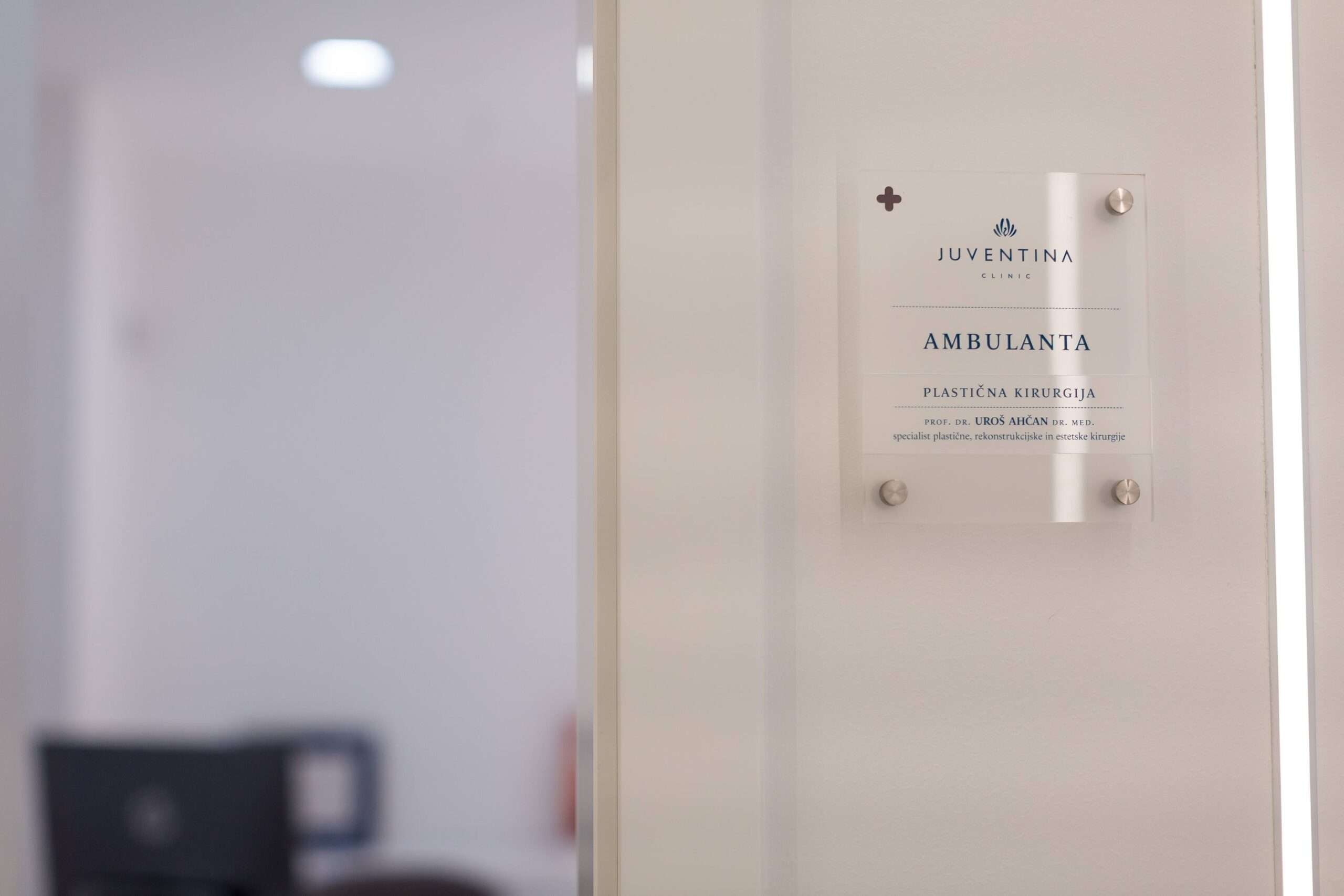
Entrance Board Juventina Clinic – Prof. Dr. Uroš Ahčan, Plastic Surgery

Preparation for surgery

Before the procedure, we conduct a thorough examination and, if necessary, perform additional diagnostic tests. If needed, we also use magnetic resonance imaging (MRI).

Diagnostics include:

  • Clinical examination
  • Contracture grade assessment
  • If needed, also an MRI of the arm, which allows for precise assessment of the disease's extent and its relationship to important structures.

We recommend:

  • Arm load adjustment
  • Adherence to medication instructions
  • Smoking Cessation (for better healing)
Within the Juventina Care 360° additional program, we provide comprehensive preparation for surgery, fast and effective rehabilitation, and access to advanced methods for post-surgery regeneration. 

Procedure steps

Based on the clinical examination and patient interview, we opt for a surgical procedure under local anesthesia (wrist, venous, axillary block) or, rarely, general anesthesia. After preliminary marking, the procedure is performed in a bloodless field using surgical loupes. We make an incision along the marked part of the palm and expose the thickened, cord-like, nodular thickening. We carefully retract the neurovascular bundles that are in close contact with the altered aponeurosis. The altered tissue is completely removed, and the fingers are straightened. Then, we perform meticulous hemostasis (stopping bleeding), suture the skin, and apply a splint and compression bandage.

Make a precisely planned cut in the palm
Affected connective tissue is displayed
Protect your nerves and veins.
Remove thickened aponeurosis and release affected fingers

A minimally invasive and precise approach allows for:

  • better arm function
  • fewer complications
  • Optimal healing

Recovery

After the procedure, we recommend that you carefully follow the surgeon's instructions and adjust your personal and professional activities accordingly. At home, we recommend rest with your arm in a sling (at heart level) and, in case of pain, analgesics as agreed. For 7 days after the procedure, I advise against the use of medications containing acetylsalicylic acid (Aspirin). Smoking and the use of tobacco products are not recommended, at least during the healing period. 
After surgery, the following may be present:

  • mild to moderate pain
  • swelling
  • tightening sensation

Important:

  • Follow the post-operative mobility instructions.
  • removal of stitches after approximately 14 days
  • Physical therapy and rehabilitation
  • using scar treatment products

Finger maneuverability gradually improves in weeks to months after surgery. With the program Juventina Care 360° we ensure comprehensive preparation for the procedure, rapid and effective recovery, and access to advanced regenerative therapies post-surgery.

Juventina Care 360° includes:

  • performance of medical examinations
  • rehabilitation program
  • products and services for rapid and effective recovery
  • most advanced methods for regeneration and better results

For best results, we recommend:

Wearing the brace as directed
Regular finger exercises
Physical therapy and hand rehabilitation
Negate scar

Juventina Care 360° - Comprehensive medical approach

Preparation

Preparation for surgery, medical examinations, and rehabilitation program.

Therapies

Advanced Technologies for Accelerated Recovery (LED, Pressotherapy, IV Therapy).

Support

All the products and services you'll need for a fast and effective recovery.

Monitoring

Regularly monitor progress with check-ups and adjust therapy as needed.
scene

Surgery price

The cost of surgery depends on the extent of the disease and the complexity of the operation.
QUESTIONS

Frequently Asked Questions

A consultation with our doctor will help determine if the procedure is appropriate for your specific needs and health condition.

In mild cases, no, but in advanced ones, it is often the most effective solution.

Yes, it's a chronic illness, so relapses are possible.

Basic recovery takes a few weeks, while full recovery takes several months.

The surgery is performed under anesthesia, and post-operative pain is manageable.

The goal of the procedure is to improve function and mobility.

Scarring after surgery remains, but with proper surgical technique and post-operative care, it does not cause functional problems.

It enables an accurate assessment of disease prevalence and better intervention planning.

Yes, it is important for optimal flexibility and function.

Subscribe

This field is for validation purposes and should be left unchanged.
NameRequired
Installment payments
Parking near the clinic
Accessible public transport
Access for people with reduced mobility
TITLE
Vilharjeva Cesta 7,
Ljubljana, Slovenia
Social networks

How to get to us?

SUBSCRIBE TO E-NEWSLETTER

You can unsubscribe at any time. For more details, see our Privacy policy.

© 2026 Juventina Clinic · ALL RIGHTS RESERVED