Plastic and aesthetic surgery

Basal joint osteoarthritis (CMC joint osteoarthritis)

Pain in the thumb and weakened grip strength can significantly impact daily activities. At Juventus, based on a thorough examination, we determine individually tailored treatment to effectively restore hand function.

Individual approach

A plan tailored to each patient

Safety

Medical Standards and Protocols

Experienced team

Based on years of experience

High standards

Highest quality service
Rizarthrosis is the wear and tear of the saddle joint of the thumb, which significantly affects hand function, especially in tasks requiring a precise grip.
The problem can significantly limit daily activities such as opening jars, writing, or working with your hands.

Saddle joint osteoarthritis occurs more frequently in:

  • women over 40
  • Repetitive strain injuries
  • individuals with a genetic predisposition
  • joint injuries

The pose is suitable for individuals with:

  • pain in the thumb area (especially when strained)
  • reduced gripping force
  • limited thumb mobility
  • swelling or deformity of the joint
  • Procedure duration
60–120 minutes
  • Anesthesia
Translation / General
  • Recovery time
2–6 weeks (basic)
  • Complete improvement
Several months

Procedure Description

Rheumatoid arthritis of the thumb is caused by wear and tear of the cartilage in the joint between the thumb’s metacarpal bone and the wrist bone, leading to pain, instability, and reduced function. Based on the examination, we may opt for treatment with nonsteroidal anti-inflammatory drugs (NSAIDs) and rest, as well as the use of a splint or injections of a local anesthetic and a corticosteroid. Especially in advanced cases, this type of treatment is not long-lasting or very effective, so we recommend surgery. We may suggest joint fusion or arthroplasty to patients.

In the early stages, we may recommend:

  • Rest and load adjustment
  • brace
  • anti-inflammatory therapy
  • injection therapy

For advanced cases, we recommend surgery. The goal of the procedure is to reduce pain, improve function, and restore grip strength.

At Juventina, we perform a variety of surgical techniques:

  • Arthrodesis (joint fusion)
  • Arthroplasty (tendon interposition joint reconstruction - LRTI)

The choice of method is based on:

  • Wear levels
  • Functional needs of the patient
  • Individual Anatomy
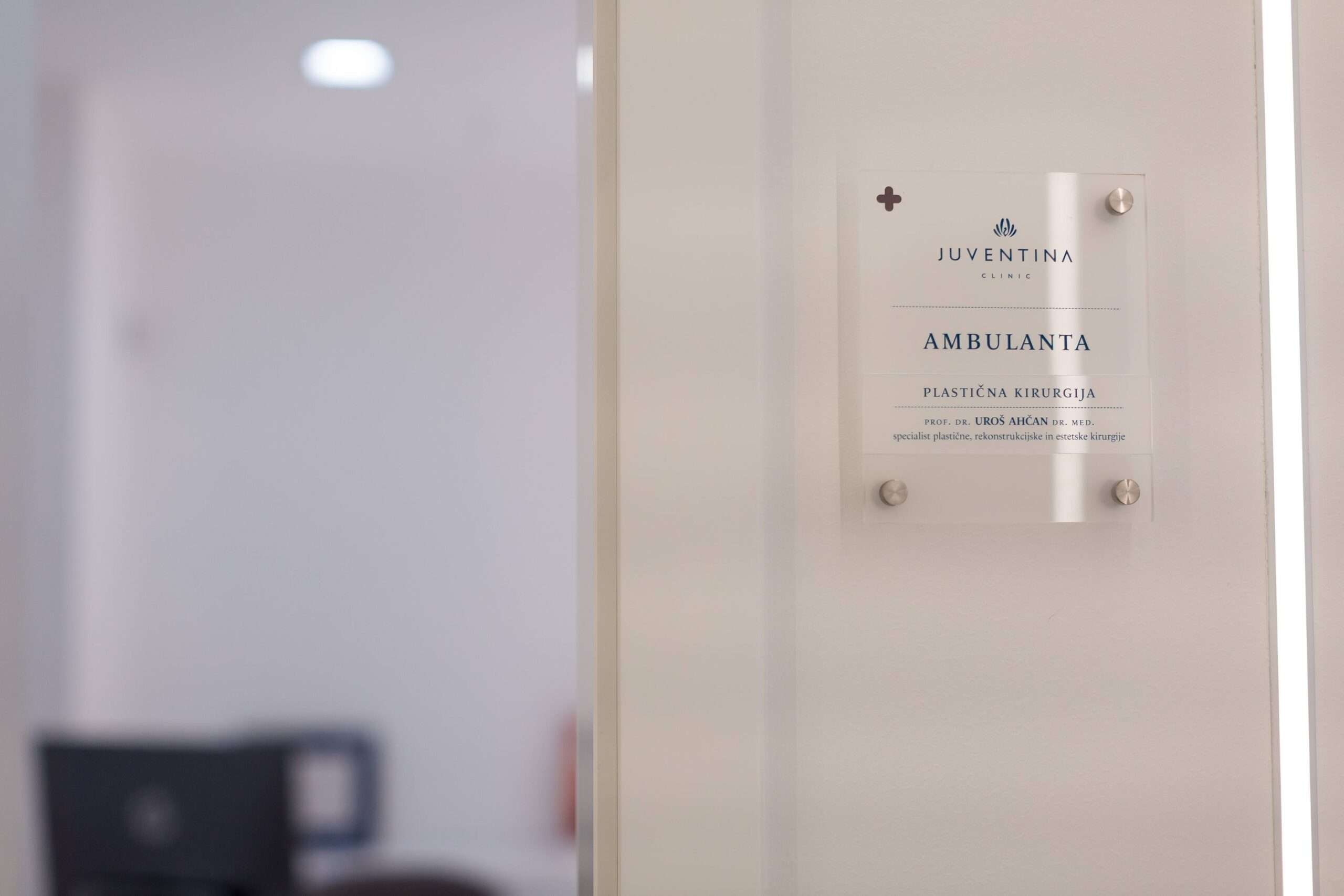
Entrance Board Juventina Clinic – Prof. Dr. Uroš Ahčan, Plastic Surgery

Preparation for surgery

Before the procedure, we conduct a thorough examination and diagnostic evaluation to determine the optimal course of treatment. If necessary, we use imaging tests and magnetic resonance imaging (MRI) of the arm.

Diagnostics include:

  • clinical examination
  • functional assessment of the decision
  • X-ray of the hand
  • if necessary, an MRI of the arm, which allows for an accurate assessment of the degree of wear and tear and the condition of the soft tissues
As part of the Juventina Care 360° supplementary program, we offer comprehensive preparation for your procedure, quick and effective recovery, and advanced therapies for better regeneration. 

Procedure steps

After a preliminary consultation and design in a bloodless field, the operation is performed under local or general anesthesia with a short incision over the joint. The joint is exposed, and the affected part of the joint surface (base of the metacarpal bone and the wrist bone – a multangular bone or trapezium) is removed. Then, according to the plan, the joint is stabilized or reshaped by tendon weaving. We proceed with precise hemostasis (stopping bleeding) and skin suturing. After the operation, a splint is applied.

An incision is made above the affected joint.
Remove worn-out end structures
According to the plan:
the joint stabilizes (arthrodesis) or is converted using an interface (arthroplasty)
After surgery, we'll apply a splint for protection and stabilization.

We use modern surgical techniques that enable:

  • High precision
  • Long-term results
  • Optimal Hand Function

Recovery

After surgery, we expect that there may be minimal pain, swelling, and a pulling sensation in the area of the surgical incision. These symptoms usually disappear for the most part after approximately 3 weeks. 

After surgery, the following may be present:

  • Mild to moderate pain
  • Swelling
  • Feeling of tightness

It is important to consider:

  • Wear
  • Suture removal after 10–14 days
  • Postoperative rehabilitation and physiotherapy
  • removal of fixation elements (if used in particular techniques) after five weeks

The full function gradually improves in the months after surgery. With an additional program Juventina Care 360° We enable comprehensive preparation for surgery, fast and effective recovery, and support with the most modern methods for faster regeneration. 

Juventina Care 360° includes:

  • performance of medical examinations
  • rehabilitation program
  • products and services for faster recovery
  • Modern methods for post-operative recovery

For best results, we recommend:

Consistent use of the brace
Gradual range of motion as directed
Physiotherapy
Negate scar

Juventina Care 360° - Comprehensive medical approach

Preparation

Preparation for surgery, medical examinations, and rehabilitation program.

Therapies

Advanced Technologies for Accelerated Recovery (LED, Pressotherapy, IV Therapy).

Support

All the products and services you'll need for a fast and effective recovery.

Monitoring

Regularly monitor progress with check-ups and adjust therapy as needed.
scene

Surgery price

The cost of the surgery depends on the chosen treatment method.
QUESTIONS

Frequently Asked Questions

A consultation with our doctor will help determine if the procedure is appropriate for your specific needs and health condition.

Not always – non-surgical approaches also help in the early stages.

Basic recovery takes a few weeks, while full recovery takes several months.

The goal of the procedure is to significantly reduce or eliminate pain.

It depends on the chosen method and the degree of wear.

The surgery takes place under anesthesia, and post-operative pain is manageable.

Brazgotina is small and usually unnoticeable.

It allows for accurate prognosis and better treatment planning.

After appropriate surgical treatment, recurrences are rare.

Subscribe

This field is for validation purposes and should be left unchanged.
NameRequired
Installment payments
Parking near the clinic
Accessible public transport
Access for people with reduced mobility
TITLE
Vilharjeva Cesta 7,
Ljubljana, Slovenia
Social networks

How to get to us?

SUBSCRIBE TO E-NEWSLETTER

You can unsubscribe at any time. For more details, see our Privacy policy.

© 2026 Juventina Clinic · ALL RIGHTS RESERVED